SLC Stephen L. Cawelti Family Law Attorney
Practice Area

Los Angeles Divorce Attorney

Divorce can affect nearly every part of your life, from your finances and property to your relationship with your children. Having an experienced divorce attorney on your side matters.

Stephen L. Cawelti is a California Board-Certified Family Law Specialist who has practiced exclusively in divorce and family law since 2006. He represents clients throughout Los Angeles in divorce matters ranging from negotiated settlements to complex financial disputes, child custody issues, and litigation.

Why clients trust Cawelti Law

Stephen L. Cawelti, Los Angeles divorce and family law attorney
Choosing a Divorce Attorney

Experience Matters When the Stakes Are High

Who you hire to represent you in a divorce matters. Your attorney should understand when to negotiate, when to push back, and when a case needs to go to court.

Stephen’s philosophy is simple: settle intelligently or litigate aggressively. When a fair resolution can be reached outside the courtroom, he works toward it. When it can’t, he is prepared to fight for his client’s interests in court.

With more than 20 years focused exclusively on family law, Stephen helps his clients laser in on their priorities, weigh their options, and build a strategy for moving forward.

Request a Consultation

Tell us a little about your situation and we’ll follow up within 1 business day.

Preferred method of contact (please select all that apply)

Choosing the Right Divorce Attorney

Stephen Cawelti discusses what to look for when hiring a divorce attorney — video thumbnail
Video transcript

When going through a divorce, one of the most important decisions that you'll make is who you hire as your attorney — and not all attorneys are created equal. There are so many attorneys out there who attempt to be the Jack of all trades. They dabble in a little bit of family law, a little bit of bankruptcy, some criminal defense, some personal injury. But the fact of the matter is the jack of all trades will get lapped by the master in negotiation and in court.

You want to pick an attorney who specializes in divorce and family law, and at our firm we do that. We specialize in one thing and one thing only: family law. It is important for your divorce attorney to have experience inside the courtroom, to know the judges in the area, to have solid negotiation skills, and to know the experts in the field. Stephen has over 15 years of experience exclusively practicing family law in Southern California and has successfully handled hundreds of divorce cases.

Divorce is often one of the only times an individual will need to hire an attorney in their life. It is imperative that you do your research and ensure that your attorney has the right experience and approach to handle your case effectively. You want to select an attorney that will deal with your case in the appropriate way. A lot of people in a bind initially gravitate to the pit bull type attorney who is overly aggressive, but if you're hoping to keep your case out of divorce court an overly aggressive lawyer can take your case off the rails, set the wrong tone in negotiations, interfere with your settlement, and drive up legal fees.

Contrary to what is portrayed on TV, these types of lawyers often make the divorce process drag on and can also make the process very uncomfortable for everyone involved, including the judge. You don't want that. Successful settlements are built on a rigorous and intelligent cost-benefit analysis. You want to find an attorney who is a skilled negotiator but is also ready to defend you in court if needed. Thank you.

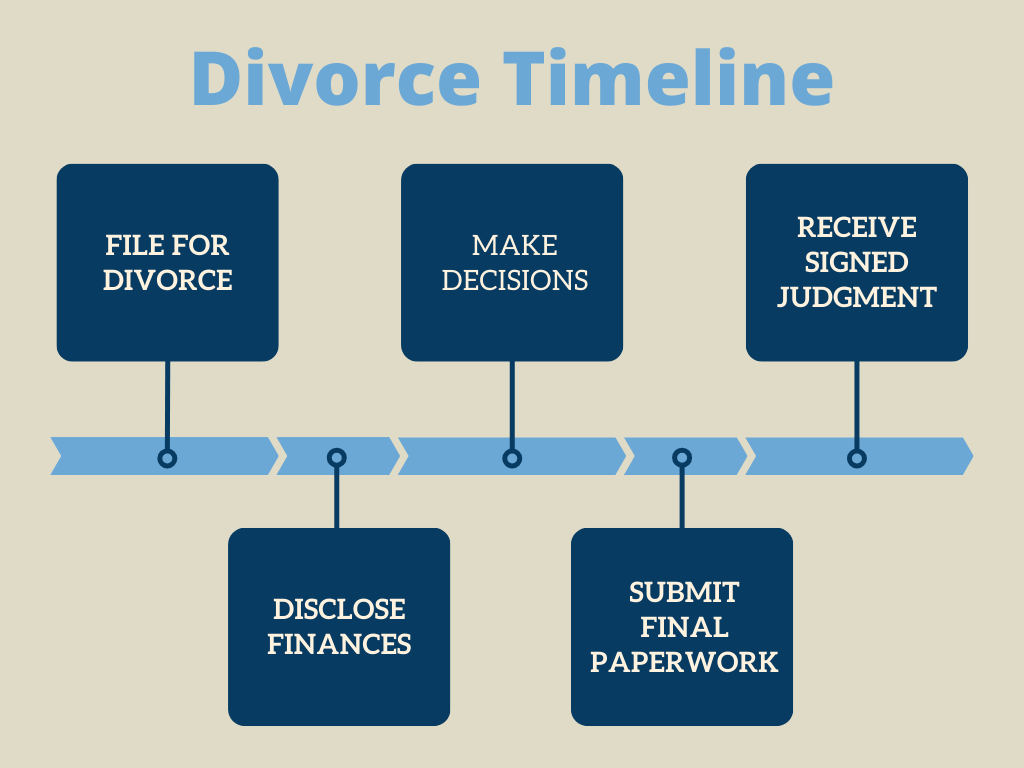
California divorce timeline graphic showing the major stages from filing through final judgment
The Timeline

How the California Divorce Process Works

01

File & Serve

One spouse files for divorce and formally serves the other spouse, who generally has 30 days to respond.

02

Disclose Finances

Both spouses exchange required financial information about their income, expenses, assets, and debts.

03

Reach Decisions

Issues such as property, custody, and support can be resolved through agreement, negotiation, mediation, or, when necessary, by the court.

04

Finalize the Divorce

Once the issues are resolved, final paperwork is submitted to the court. California also requires a minimum waiting period of six months after divorce papers are formally served before a divorce can become final.

Know Your Options

Mediation? Litigation? Collaborative divorce? The right path depends on your case. Stephen breaks down four divorce options and the tradeoffs you should understand before choosing one.

Stephen Cawelti explains four California divorce options — video thumbnail
Video transcript

Contrary to what is portrayed on TV, divorce does not have to end in a nasty court battle and does not have to be rife with drama. You have options. These options include an uncontested divorce, mediation, a collaborative divorce, and finally litigation. And a good divorce attorney will help you to analyze your unique case and determine which option is the best fit for you. Sometimes that means switching between options.

An uncontested divorce is a situation when the two parties are in general agreement about most aspects of their case. One of the individuals then hires an attorney to draw up the agreement, help work out any small disagreements, and submit the paperwork to the court. This type of divorce is extremely cost effective, but it is not right for everyone. If you feel like it might be right for you, don't be afraid to explore that option with your attorney.

Mediation is another divorce option and can be miraculous for the right people. When both parties decide to mediate, they hire a third-party mediator — in this case our firm — to mediate the nuances of their divorce. The mediator educates the parties about their rights and responsibilities and helps the couple reach an agreement outside of court. This allows the individuals to remain in control of their divorce and the decisions surrounding it. Mediation not only saves time but also a significant amount of money and stress. Our firm specializes in divorce mediation, and as a family law attorney Stephen will be able to ensure that your agreement covers all of your bases.

In collaborative divorce, each individual hires a divorce lawyer who assists them in negotiating the terms of the divorce. Each individual meets and counsels separately with their own lawyer and often a team of other experts in the areas of finance, mental health, and child custody. The group then comes together and meets several times to work out the terms of the agreement. Collaborative law is unique in that both of the lawyers and the spouses sign an agreement that they will not go to court unless all else fails. If for whatever reason an agreement cannot be reached and the case has to go to court, the divorce attorneys withdraw from the case and the parties must hire new divorce lawyers or go out on their own. It's important to note that in a collaborative divorce the parties do not need to agree on everything. They do, however, need to have a commitment to cooperation and collaboration. I've seen collaborative divorce yield amazing results for the right people. It's important for you to talk to a divorce lawyer who has extensive experience in collaborative law if you feel that this option might be something that you want to look into.

Litigation or going to court is typically the last option that I recommend. It's expensive, your dirty laundry gets aired out in public, and you give up an element of control because the judge ultimately decides the nuances of your case. The motto at our firm is settle intelligently or litigate aggressively. If at all possible we try our best to keep your case out of court, but if the need does arise we have the experience in the courtroom and are prepared to defend your case. Worth noting is that some cases go to court many times over many preliminary issues like temporary custody or a motion for attorneys' fees, so there are often multiple opportunities to settle intelligently prior to or instead of the final trial that concludes a typical case.

A lot of individuals ask us if they can complete their divorce without the help of a divorce attorney. The short answer is yes, you can — but there are some risks with doing so. The saying “an ounce of prevention is worth a pound of cure” rings true in divorce. Even if you and your ex agree on pretty much everything, having an attorney review your paperwork will ensure that you prevent financial mishaps down the road. This can often be the most cost-effective way to go and still make sure it's done right.

Frequently Asked Divorce Questions

Do I actually need a divorce lawyer to get divorced?

No. California does not require you to hire a lawyer to get divorced. If you’ve been married a short time, have few assets or debts, and agree on every aspect of your divorce, handling it yourself may be an option.

The risk is that seemingly simple agreements can have consequences you don’t anticipate.

For example, one spouse may agree to keep the house instead of receiving spousal support—only for the home’s value to later fall significantly. Or spouses may agree that each will pay a particular joint debt, but if one doesn’t pay, the creditor may still pursue the person whose name is on the account.

The more you have at stake, the more important it becomes to understand the consequences before signing an agreement.

How much does a divorce cost in Los Angeles?

There is no standard cost for a divorce because the amount of legal work required can vary significantly from case to case.

Most divorce attorneys, including our firm, bill by the hour and require an upfront retainer. At your consultation, we’ll learn more about your situation and quote a retainer based on the anticipated needs of your case. Any unused portion of your retainer is refunded.

The biggest variable is often conflict. A divorce that can be resolved through negotiation or mediation will generally require less attorney time than one involving extensive disputes or litigation.

How long does a divorce take in California?

California has a mandatory six-month waiting period before a divorce can become final. However, six months is a minimum—not an estimate of how long every divorce will take.

The actual timeline depends on the complexity of the case and how quickly the spouses can resolve issues involving property, finances, support, custody, or other disputes. A relatively straightforward divorce may move much faster than a highly contested case.

Is a California divorce public record?

Generally, divorce court records are public records, although access to particular documents or information may be restricted in some circumstances.

For clients concerned about privacy, resolving disputes outside of a public trial may provide more privacy than litigating those issues in court. Stephen can help you evaluate options such as negotiation, mediation, or private judging when privacy is a significant concern.

Does it matter who files for divorce first in California?

Being the first person to file for divorce does not automatically give you an advantage in the outcome of your case.

There can, however, be strategic or practical reasons to file first depending on your circumstances. If you believe divorce is likely, it’s worth speaking with a family law attorney before making major financial decisions, moving out of the family home, or taking other steps that could affect your case.

I’m considering divorce. Where do I start?

Before making major decisions, understand what you’re dealing with.

Gathering information about your finances, assets, debts, income, and other important issues can help you understand what may be at stake. It’s also helpful to speak with an experienced divorce attorney before making decisions that could affect your finances, property, or children.

A consultation doesn’t mean you’ve decided to get divorced. It gives you an opportunity to understand your options and make your next decision with more information.

Call 747-200-5712